Uncoupling Membrane for Tile Installation: Benefits, Applications
Tile is a durable and attractive flooring material, but even a properly installed tile floor can be affected by movement within the underlying substrate. Thermal expansion and contraction, concrete shrinkage, minor substrate movement, and changes in environmental conditions can all create stress within a tile installation. Over time, this stress may contribute to cracked tiles, damaged grout joints, or other installation problems.
An uncoupling membrane is designed to help address these challenges by creating a separation layer between the substrate and the tile covering. This layer helps reduce the direct transfer of certain stresses from the substrate to the finished tile surface, supporting a more durable and reliable tile installation when used as part of a properly designed flooring system.
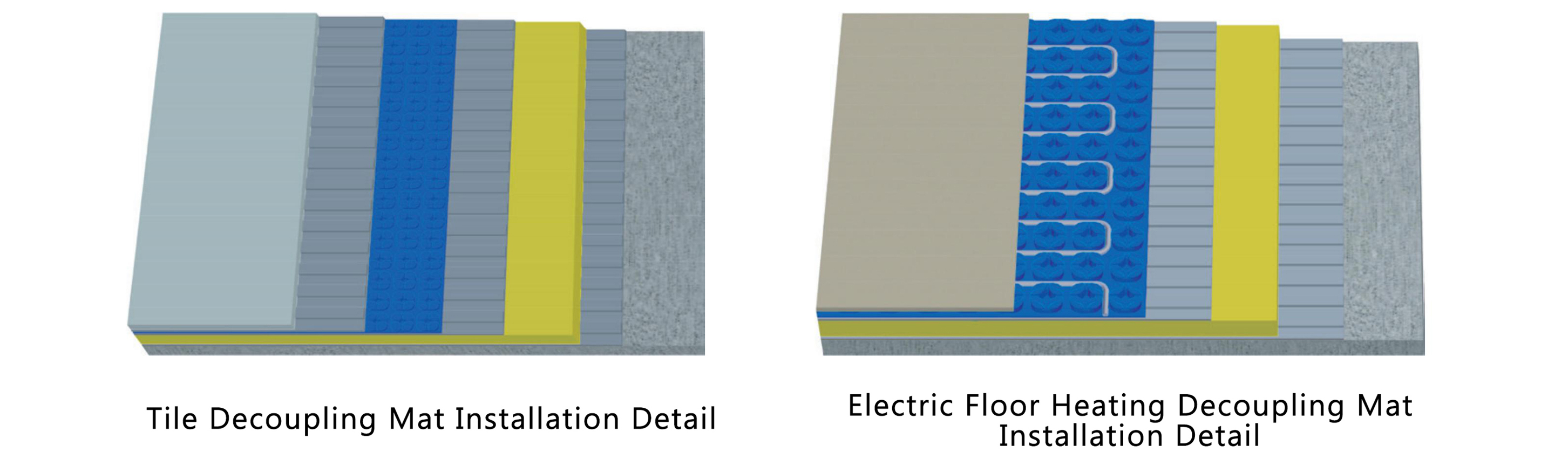
In this article, we explore how uncoupling membranes work, their key benefits, common applications, and the basic structure of a typical tiled floor assembly.
What Is an Uncoupling Membrane?
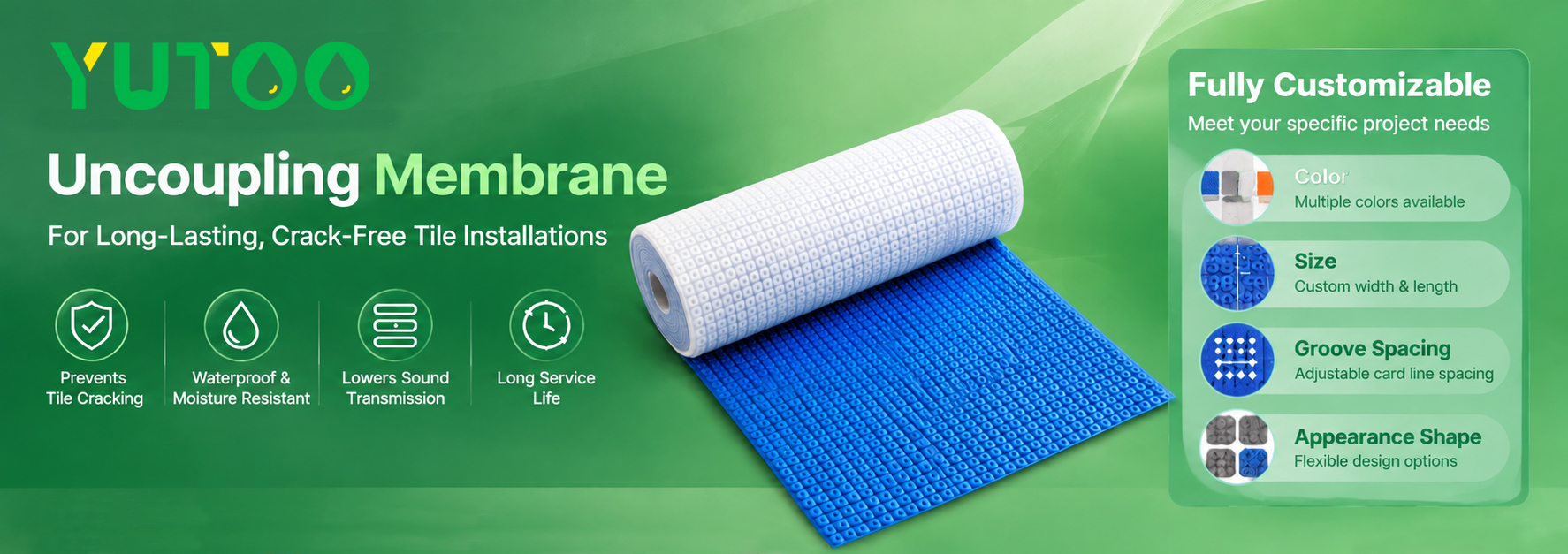
An uncoupling membrane is a thin, specialized layer installed between a substrate, such as a concrete slab or suitable subfloor, and a tile covering. It is designed to reduce the direct transfer of certain in-plane stresses and movements from the substrate to the tile layer.
Unlike a conventional direct-bonded tile installation, an uncoupling system introduces a functional interface between the substrate and the tile. Depending on the membrane design, its structure may help accommodate differential movement while maintaining support for the tile covering.
Uncoupling membranes are commonly used in residential and commercial flooring projects, including bathrooms, kitchens, living areas, renovation projects, and installations incorporating underfloor heating.
It is important to note that an uncoupling membrane does not eliminate all substrate movement or replace structural repairs, movement joints, or waterproofing where these are required. Its performance depends on the product design, substrate condition, installation method, and compatibility of the complete tile assembly.
7 Key Benefits of Using an Uncoupling Membrane
1. Helps Protect Against Tile and Grout Cracking
Cracks in the substrate can create stress concentrations that affect the tile covering above. When tile is bonded directly to a substrate, certain types of movement and stress may be transferred to the tile and grout joints.
An uncoupling membrane helps reduce this direct stress transfer by introducing a separation layer between the substrate and the tile covering. Its structure is designed to accommodate limited differential movement, helping minimize the risk of stress-related tile and grout cracking under suitable installation conditions.
This makes uncoupling membranes a valuable component in tile installations where substrate movement is a design consideration.
However, an uncoupling membrane should not be treated as a substitute for repairing unstable or structurally damaged substrates. Active cracks, structural movement, and required movement joints must be evaluated and addressed appropriately.
2. Accommodates Differential Movement and Relieves Stress
Different materials respond differently to changes in temperature, moisture, and environmental conditions. Concrete, wood-based subfloors, tile, and setting materials may expand, contract, shrink, or move at different rates.
These differences can create stress at the interface between the substrate and the tile covering.
An uncoupling membrane is designed to accommodate limited differential movement between these layers, reducing the direct transfer of certain stresses into the tile assembly. This can be particularly beneficial in installations exposed to temperature fluctuations, concrete shrinkage, or minor non-structural substrate movement.
By helping manage these stresses, an uncoupling membrane contributes to a more resilient tile installation.
3. Well Suited for Underfloor Heating Systems
Underfloor heating systems expose tiled floors to repeated heating and cooling cycles. As temperatures change, the substrate, heating components, setting materials, and tile covering may expand and contract differently.
Without appropriate system design, these differences can contribute to stress within the tile assembly.
An uncoupling membrane designed and approved for use with underfloor heating can help accommodate differential movement between the substrate and the tile layer. This helps reduce the transmission of certain thermal stresses and supports the long-term performance of the flooring system.
For best results, the membrane should be compatible with the heating system and the selected tile installation materials. The installation must also follow the manufacturer's requirements for heating-system commissioning, temperature control, movement joints, and curing times.
4. Supports Long-Term Tile Installation Durability
The durability of a tile floor depends on more than the quality of the tiles themselves. Substrate stability, surface preparation, bonding materials, movement management, and installation workmanship all play important roles.
By providing a functional separation layer, an uncoupling membrane helps reduce the effects of certain substrate movements on the tile covering. This can help limit movement-related stress and contribute to a more reliable flooring assembly.
When combined with a suitable substrate, compatible setting materials, correct installation techniques, and properly designed movement joints, an uncoupling membrane can form an important part of a long-lasting tile installation.
5. A Practical Solution for Renovation and Remodeling Projects
Renovation projects often involve existing concrete slabs, screeds, or other substrates with different material characteristics and histories. These surfaces may require careful assessment before new tiles are installed.
An uncoupling membrane can provide an additional functional layer between a suitable existing substrate and the new tile covering, making it a useful option for many remodeling applications.
Potential applications include upgrading bathroom floors, renovating kitchens, replacing old floor finishes, and installing new tiles over properly prepared existing substrates.
Before installation, the existing surface must be assessed for structural stability, moisture conditions, contamination, flatness, and compatibility with the selected system. Loose materials, unstable areas, and structural defects must be corrected as necessary.
The suitability of installing over existing tiles or other floor coverings depends on the specific membrane system and its manufacturer's instructions.
6. Lightweight, Low-Profile Design for Efficient Installation
Many uncoupling membranes feature a thin, lightweight construction that is easy to transport, handle, cut, and position on site.
Compared with some thicker underlayment systems, a low-profile membrane can add relatively little height to the overall floor assembly. This can be advantageous in renovation projects where transitions to adjacent floors, door clearances, or available installation height are important considerations.
The membrane's lightweight design may also simplify material handling and help installers work efficiently across larger floor areas.
Actual installation thickness, coverage, cutting requirements, and material consumption vary by product. Installers should refer to the manufacturer's technical data sheet for product-specific specifications and installation guidance.
7. Versatile for Residential and Commercial Applications
Uncoupling membranes can be used in a wide range of tile flooring projects, provided the selected product is suitable for the substrate, tile type, environmental conditions, and intended use.
Common applications include:
Bathrooms and wet areas: Tile installations exposed to regular moisture, subject to the requirements of the complete waterproofing system.
Kitchens: Residential and commercial kitchen floors where reliable tile installation performance is important.
Living rooms and interior spaces: Tiled floors in areas where substrate movement must be considered.
Large-format tile installations: Projects requiring careful control of substrate flatness, mortar coverage, and movement management.
Underfloor heating systems: Heated floors subject to repeated temperature changes, using a compatible membrane system.
Renovation and remodeling: Suitable existing substrates prepared in accordance with product requirements.
Commercial and high-traffic spaces: Applications where the membrane, tile, substrate, and setting materials are specified for the expected loads and service conditions.
For wet areas, it is essential to distinguish between uncoupling and waterproofing. Some membranes are designed and approved to provide waterproofing when installed with the required seams, perimeter details, drains, and accessories. Other membranes are not waterproofing systems on their own. Always confirm the specific product's capabilities before specifying it for wet-area applications.